
Diagnosing the Democratic Crisis in Europe: Reflections from a Council of Europe Hearing

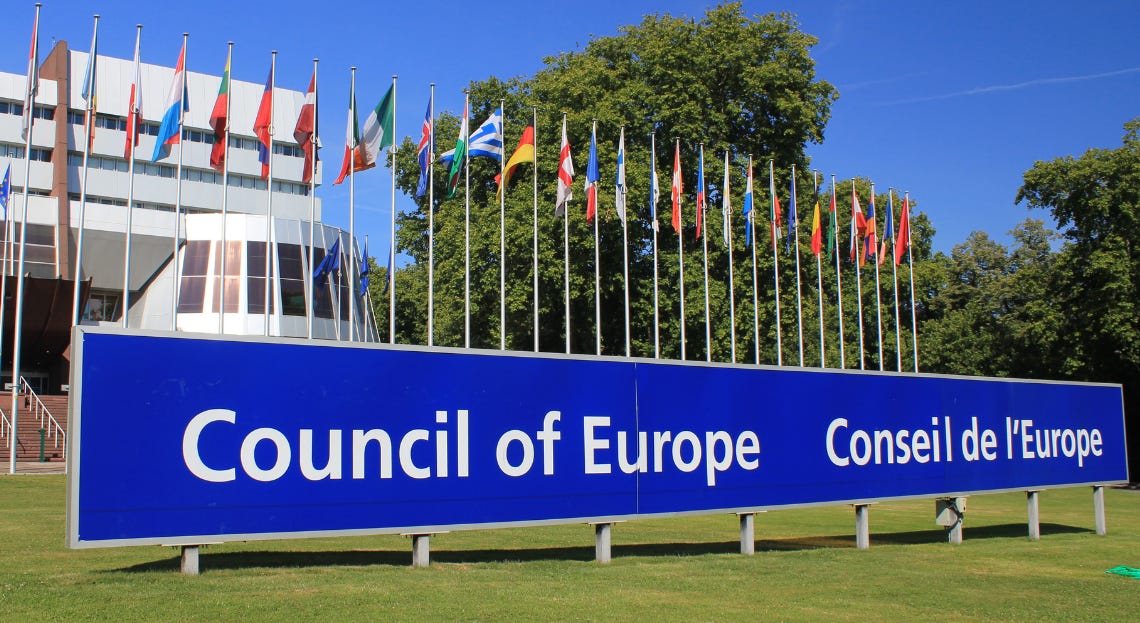
On 23 April 2026, I participated in a hearing at the Council of Europe in Strasbourg to address the question, “Is the democratic crisis primarily a social crisis?” The session, organised by the Special Committee on the New Democratic Pact and co-sponsored by the Committee on Social Affairs, Health and Sustainable Development, brought together policymakers, parliamentarians and researchers to reflect on declining trust in democratic institutions across Europe, and what to do about it. Below are the questions I was asked at the hearing, and a slightly more elaborated version of the answers I gave.
Q1. What moves you to study the crisis of democracy and its social roots?
I care about the quality of our shared institutions and practices, and the way they shape our well-being, both at a personal level and at a communal level. Across Europe, we are witnessing clear signs that the traditional democratic order is in a state of crisis: we are seeing rising anti-establishment sentiment, declining trust in public institutions, a growing sense of disempowerment and disillusionment among citizens, and of course, a declining quality of life for many. We need to think through the root causes of these symptoms of disease, and not just settle for superficial diagnoses, such as the notion that citizens are “ignorant” or have been taken in by “disinformation.” Only with a mature and honest diagnosis can we hope to develop realistic solutions to the social and economic crisis we face in Europe.
Q2. Which factors trigger a shift towards protest voting or abstention?
The first thing to note is that protest voting and abstention are not equivalent phenomena. Protest voting reflects a form of engagement - which often involves the hope of change, whereas abstention signals disengagement, and often either indifference or despair.
Both, however, can be driven by a combination of factors:
Political factors: Many citizens feel that political elites are not listening to their concerns—especially on issues like housing, public services, and immigration. At the same time, dissenting views are often dismissed in ways that alienate segments of the population.
Economic factors: For many, especially younger people, living standards appear to be stagnating or declining. They feel cheated by the social contract. They put in their dues, but are now stuck in rent traps and hit by rising costs of living and prohibitively high taxes.
Institutional factors: Highly centralised political systems can leave citizens feeling disempowered. This can be compounded by regulatory approaches—such as efforts to aggressively police online speech—that limit or artificially suppress the open discussion of difficult problems. In addition, high taxes and highly complicated economic regulations impose excessive costs on economic activity.
Cultural factors: Increasing “individualisation,” which refers to a worldview more focused on personal growth and fulfilment than community bonds, means that many young people, in particular, are less embedded in strong communities and more focused on personal lifelplans and career optimisation, which can make the idea of a political community and its responsibilities look irrelevant or even invisible.
Q3. How can social protection and individual responsibility be balanced?
A sustainable approach to our welfare systems requires rethinking how social protection systems are organised to ensure they both deliver on their promises and offer incentives for citizens to use them responsibly. Large-scale, top-down and nationalised welfare systems are increasingly poorly managed and are not doing a good job at weathering the demographic crisis or promoting a strong sense of personal responsibility. So what is a better way to reconcile social protection with individual responsibility?
First, we should bring protective institutions closer to local and regional actors, who are in a better position to understand people’s needs and tailor the system to them, as well as trying out innovative solutions such as different models of public-private partnership. This is already being implemented, to a certain degree, in places like Britain, and some autonomous regiones of Spain, such as Navarra, already have a substantial degree of healthcare autonomy, which could be further enhanced.
Second, we should place greater emphasis on reciprocity, ensuring that welfare and social security systems encourage personalised contributions and a sense of personal ownership. One way of doing this is by linking benefits more clearly to individual contributions where appropriate. For example, the use of private pension schemes alongside public provision can help reinforce the connection between what individuals contribute over time and what they receive in return.
The broader goal is not to weaken social protection, but to structure it in a way that is both sustainable and perceived as fair by those who support it.
Q4. What levers can reduce social frustration?
Several practical steps can help reduce social frustration:
Exercise restraint in the use of censorship, particularly in areas like online speech, where overreach can erode trust.
Encourage policy experimentation, allowing different regions or sectors to test out solutions adapted to their circumstances. In this way, polarisation of national populations around controversial policy questions can be significantly mitigated.
Reduce red tape and punitive taxation, making it easier for citizens to start businesses, build homes, or establish institutions such as schools or community centres. Europe is notoriously afflicted by the plague of over-regulation.
Adopt immigration policies that are transparent, fair and proportionate to the capacities of the host societies.
Together, these sorts of measures can help citizens experience institutions as enabling them to achieve their life goals rather than obstructing them or channelling the fruits of their labours to politicians’ pet projects.
Q5. How can the effectiveness of a social contract be assessed?
A social contract must be evaluated not just by its intentions, but by how it functions in practice. Two criteria are especially important:
Structural fitness: Does the social system meaningfully incorporate economic actors, civil society, and local institutions, including local political institutions? Can it adapt to changing and diverse needs? Does the contract allow for different variations, within a principled constitutional scheme, adapted to the needs and sensibilities of different communities?
Mechanisms of persuastion and consent: Are there effective channels of communication between citizens and decision-makers? Are decision-making processes sufficiently inclusive and distributed, avoiding a predominantly top-down arrangement?
Without these features, any political system, especially one claiming “democratic” credentials, is very likely to shed legitimacy over time.
Q6. How can public policies strengthen trust in institutions?
We should broaden the question: it is not only about public policies, but about correctly structuring our institutions. If we want to rebuild trust, we need to create more opportunities for citizens to shape their own life paths, build associations to advance their projects, start businesses, and participate meaningfully in public life.
This suggests a strategy centred on empowerment and experimentation, including:
pilot programmes in tax voucher schemes to give citizens greater control over how their taxes are spent in areas like education and healthcare
greater political devolution and enhanced municipal authority, not just symbolic gestures but the transfer of real financial and regulatory clout to lower-level institutions
cutting back excessive regulatory and administrative burdens, so that citizens face less State-imposed obstacles to their projects, whether to start a school or business, or organise a cultural association
Concluding thought
The democratic crisis in Europe cannot be reduced to a single cause. But one recurring theme is the growing distance between citizens and the institutions that govern them. Rebuilding trust will require more than policy adjustments. It will require a shift toward a model of democracy in which citizens rather than politicians are the primary actors responsible for solving social problems.
An effective response to our political and constitutional crisis requires reducing the scope of political authority, enhancing the role of local governments, and creating a system that welcomes rather than systematically frustrates citizens’ initiatives and entrepreneurship. This will require far-reaching institutional reforms that politicians have, up to now, been reluctant to undertake. But if we continue to put our faith in centralised bureacracy, its one-size-fits-all solutions will become ever more ineffective and irrelevant and we risk delegitimating the whole democratic system.
The Freedom Blog offers a thoughtful voice in defence of freedom at a time when the pillars of a free society are coming under attack across the West from our very own institutions and governments.
If you appreciate my blog posts and the careful work that goes into them, please consider supporting my work with a paid subscription, by clicking here.
My academic profile and publications are listed at my website, davidthunder.com. Below, my immediate thoughts after leaving the Council of Europe hearing: