
Child Safety Is Being Used as an Excuse to Build A Surveillance State

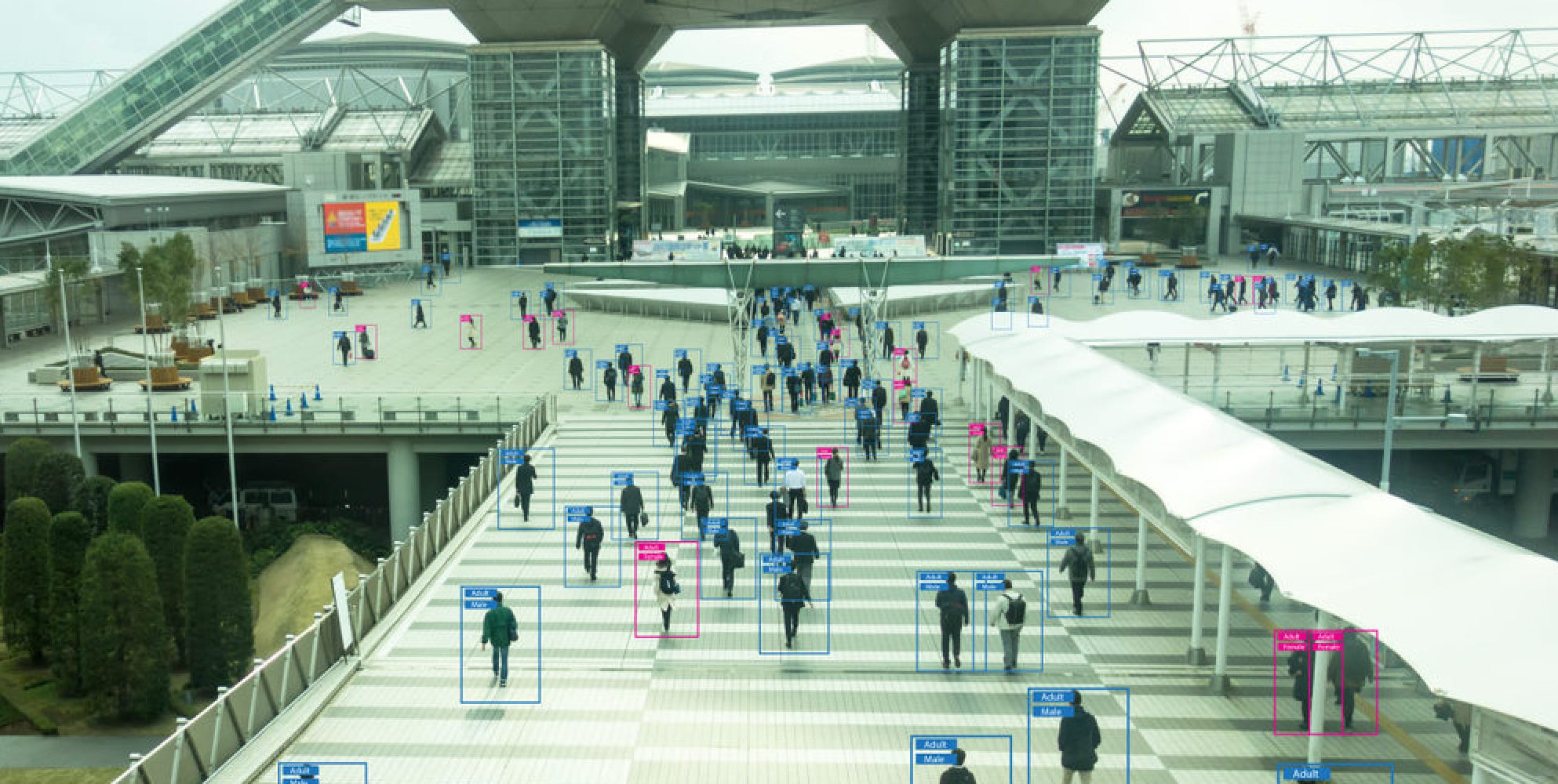
These days, we are seeing a strong push for enhanced government surveillance over digital communication, from Australia and the United Kingdom to Ireland, Germany and Spain, whether by imposing a universal digital identification requirement for accessing social media, or spying on citizens’ private chats.
The leading reason being offered for enhanced surveillance and data collection is the protection of children from online harms, such as pornography and social media addiction. But given recent experiences of shameless government overreach rationalised by “solidarity” and protection from disease, any move by government to claim enhanced powers of surveillance over our personal data and communications should be viewed with suspicion.
Sometimes governments leverage citizens’ deepest fears and most noble aspirations to convince them to expand State prerogatives at the expense of personal liberties. This is not a hypothesis, but a historical reality, evidenced in a vivid way by the UK’s psych-op operation to guilt citizens into taking the shot, and the UK’s Health Secretary boasting in private correspondence that announcing a new, more virulent variant of Covid would “frighten the pants off everyone.”
If I wanted to convince a large population of the need for a far-reaching surveillance state — and I had no principles — I would try to tap into their deepest human instincts. I would appeal to the kinds of instincts that override rational deliberation and calm thought. One of those instincts is the natural desire to protect our young from harm. We are wired head to toe to protect our children, and governments know it.
As it happens, the campaign to institute a more far-reaching surveillance state is employing precisely this argument. We are being told that we cannot protect children from online harm unless we introduce sweeping surveillance mechanisms. We see this logic at work in the Online Safety Act in the United Kingdom, and in the Digital Services Act in the European Union.
I am not suggesting that everyone who argues for a ban on under-16s having access to social media are intentionally manipulating people’s parental instincts to rationalise a surveillance State. Well-known commentators like Jonathan Haidt have done good work in uncovering the harms of online interactions for children and adolescents, and I believe his reasons for supporting a ban on social media for under-16s are sincere and noble.
However, there is a dark agenda lurking behind this push for universal digital ID that Jonathan Haidt and other defenders of the ban have underestimated. The overwhelming tendency of governments over the past several years has been to establish public support for wide-ranging surveillance powers over citizens’ private communications.
Governments have an interest, as power-holders, in gaining leverage over citizens’ data. If they can do this by appealing to “child safety,” they will. To think otherwise would be the height of naivete. Any honest debate about the regulation of social media by government actors must engage with this broader problem.
We are told that to keep children safe, we must empower state actors to monitor private conversations, weaken or eliminate encrypted privacy in our online chats, and require users of social media to identify themselves and register their biometric data each time they go online.
This is deeply problematic.
If online anonymity disappears, it becomes far easier for state actors to trace the identity and location of citizens who speak out against those in power. Some might dismiss this concern as paranoid. But it is not paranoid — it is prudent.
Recent history gives us reasons for caution. During the COVID period, governments shut down protests, froze bank accounts, and censored speech. In the United States, for example, government officials pressured social media companies to suppress criticism of COVID policies. We have ample reason to believe that governments will use the tools at their disposal to protect their narrative and bolster their power.
Now we are told that children are suffering from the addictive effects of social media, and that platforms should be made illegal or inaccessible to minors under 16. But to enforce such a rule, everyone — children and adults alike — would need to verify their identity as a condition for accessing social media. That effectively eliminates anonymity, removing a crucial safeguard against authoritarian overreach and making it much easier to track dissenters and critics.
There are further problems with universal digital ID requirements. Teenagers are remarkably adept at circumventing restrictions. They will use VPNs, new software tools, or whatever technological workaround emerges next. Heavy-handed rules may prove ineffective while still imposing broad costs on civil liberties.
There is also a troubling presumption behind these proposals: that protecting children online is primarily the state’s responsibility rather than the parents’. Parents need to wake up to the reality that social media can be addictive and psychologically harmful. Raising children in an age of social media and AI is undeniably difficult — but that responsibility cannot simply be handed over to the government.
When governments take on that role, they tend to use blunt instruments and we are likely to produce significant collateral damage for free speech and privacy.
It is time to be honest about what this debate is really about. It is not just about child safety. It is about whether the limited protection offered by proposed restrictions is worth securing in return for the infrastructure of a powerful surveillance state.